

(Asghar Ali Mubarak)
EAST RUTHERFORD — Following a dramatic, grueling 106-minute extra-time battle that saw Spain edge out Argentina 1-0 to capture their second FIFA World Cup trophy, FIFA officials took to the pitch at the New York New Jersey Stadium to present the individual accolades for the historic 48-team tournament . The tournament champions emphatically dominated the podium, securing four out of the five premier individual awards.It was his first goal of the tournament. “Honestly, I can’t believe it,” said the 26-year-old Barcelona forward. “When the ball came to me, I didn’t think much, I scored with all the strength of the Spanish people.”

His left-footed strike was Spain’s 20th shot on goal against Argentina as they dominated the final. And for all Spain’s neat passing patterns in midfield, the strike was refreshingly old-school. With 15 minutes remaining, Argentina held on for the equalizer despite losing midfielder Enzo Fernandez to a second yellow card at the end of the second half of regulation time. increased.
With 15 minutes remaining, Argentina pushed forward to equalise despite losing midfielder Enzo Fernandez to a second yellow card at the end of the second half of regulation time.
In the dying moments, Spain defender Pau Quibercy cleared a threat in front of his own goal and Argentina forward Giuliano Simeone fired the ball over the bar.
Fittingly, it was Torres who was hacking away at the ball when the final whistle blew. Spain boss Luis de la Fuente said: “We are world champions.” “I am proud and happy for my players.”
“We have grown together and thanks to the talent, commitment and values of the players and besides that the team still has a long way to go.
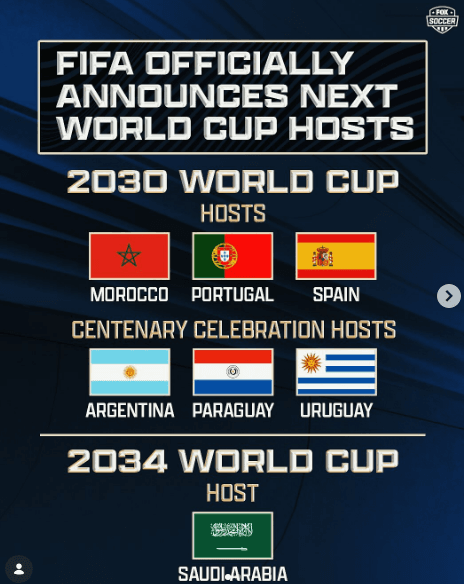
Moreover,the 2030 FIFA World Cup will be a historic centenary tournament, played across six countries and three continents from June 8 to July 21, 2030. The main host nations are Morocco, Portugal, and Spain, while Uruguay, Argentina, and Paraguay will host special opening celebration matches to mark the tournament’s 100th anniversary.

RODRI SECURES THE COVETED ADIDAS GOLDEN BALL
Spain’s midfield general and captain, Rodri, was formally recognized as the tournament’s Most Valuable Player, receiving the Adidas Golden Ball [Canadamexicousa2026]. Serving as the structural anchor for La Roja’s defensive system, the Manchester City midfielder topped tournament statistics for total passes completed and defensive interceptions.
Rodri edged out Argentine captain Lionel Messi, who took home the Silver Ball, and France’s Kylian Mbappé, who was awarded the Bronze Ball .
UNAI SIMÓN CLAIMS GOLDEN GLOVE WITH HISTORIC DEFENSIVE RUN
The Adidas Golden Glove, given to the tournament’s outstanding goalkeeper, was awarded to Spain’s Unai Simón [unai-simon-adidas-golden-glove]. The Athletic Club shot-stopper engineered a record-breaking defensive campaign, registering seven clean sheets across eight matches [unai-simon-adidas-golden-glove]. Simón conceded just a single goal during the entire tournament framework, a solitary defensive slip during Spain’s 2-1 quarterfinal triumph over Belgium.
BACK-TO-BACK GOLDEN BOOTS FOR HISTORIC MBAPPÉ
Despite France finishing outside the top two, captain Kylian Mbappé secured the Adidas Golden Boot as the tournament’s absolute top goalscorer [Canadamexicousa2026]. Mbappé netted a staggering 10 goals along with 4 assists over his 8 tournament appearances .
With this achievement, the French forward makes history as the first player to win the Golden Boot in back-to-back World Cups. His scoring run simultaneously cements him as the men’s all-time top scorer in FIFA World Cup history, reaching 22 career goals. Argentina’s Lionel Messi (8 goals) and England’s Jude Bellingham (7 goals) claimed the Silver and Bronze Boots respectively .
CUBARSÍ NAMED BEST YOUNG PLAYER; NETHERLANDS WIN FAIR PLAY
The tournament’s emerging talent honours went to 19-year-old Spanish center-back Pau Cubarsí, who was named the FIFA Best Young Player. The Barcelona defender played every single minute of the tournament, famously capping off his run by shutting down the Argentine frontline to zero shots on target during the final match.
The FIFA Fair Play Trophy was awarded to The Netherlands. The Dutch squad maintained the cleanest disciplinary slate of the expanded competition, accruing a mere 3 yellow cards and 41 fouls over their total match fixtures.
The individual award winners for the 2026 FIFA World Cup have been officially presented at the MetLife Stadium following Spain’s historic title victory over Argentina. World champions Spain dominated the podium ceremonies, sweeping four out of the five primary individual honours.
The complete list of major individual award recipients is broken down below.
⚽ The Adidas Golden Ball (Tournament MVP)
Spain captain Rodri won the Golden Ball as the best player of the entire 2026 tournament. The Manchester City midfielder served as the vital anchor for La Roja’s defensive framework and spearheaded team distribution. He completed more passes and recorded more defensive interceptions than any other player in the competition.
- Golden Ball: Rodri (Spain)
- Silver Ball: Lionel Messi (Argentina)
- Bronze Ball: Kylian Mbappé (France)
The Adidas Golden Glove (Best Goalkeeper)
Spain’s Unai Simón claimed the Golden Glove after registering a legendary and record-breaking defensive campaign. The Athletic Club stopper kept an astounding seven clean sheets across eight matches, conceding just a single goal during the entire tournament (against Belgium in the quarterfinals).
- Golden Glove Winner: Unai Simón (Spain)
The Adidas Golden Boot (Top Goal Scorer)
France’s captain Kylian Mbappé won the Golden Boot, etching his name into football history as the first player to win the award in back-to-back World Cups. Mbappé netted a staggering 10 goals alongside 4 assists across 8 games. In doing so, he also became the men’s all-time top scorer in World Cup history with 22 career goals.
- Golden Boot: Kylian Mbappé (France) – 10 goals
- Silver Boot: Lionel Messi (Argentina) – 8 goals
- Bronze Boot: Jude Bellingham (England) – 7 goals
Additional FIFA Awards
- FIFA Best Young Player: Pau Cubarsí (Spain)
The 19-year-old Barcelona center-back played every single minute for La Roja, anchoring a defense that choked out opposition attacks and restricted Argentina to zero shots on target during the final match. - FIFA Fair Play Trophy: The Netherlands
Awarded to the Dutch squad for holding the most exemplary disciplinary record across their run in the tournament, recording only 3 yellow cards and 41 fouls over their fixtures.
The final match at the New York New Jersey Stadium was a tactical masterclass dominated by Spain in regulation possession. Argentina held on with 10 heroic saves from Emiliano Martínez until Enzo Fernández was sent off in the 93rd minute. Substitute Ferran Torres finally broke the deadlock in the 106th minute to capture Spain’s second World Cup title.
In the bronze-medal match, England won a wild, historic 10-goal thriller against France, where Kylian Mbappé scored two goals to become the all-time top scorer in FIFA World Cup history with 22 career goals.
| Round | Match | Final Score | Key Match Notes |
| Final | 1–0 (AET) | Ferran Torres (106′); Red Card: E. Fernández (93′) | |
| 3rd Place | 4–6 | Wild 10-goal thriller; Mbappé breaks all-time tournament goal record |
Semifinals & Quarterfinals
Spain advanced to the final by shutting down France 2-0, while Argentina booked their spot by narrowly edging out England in a physical 2-1 battle.
Semifinals
- Spain 2 – 0 France
- England 1 – 2 Argentina
Quarterfinals
- Morocco 0 – 2 France
- Spain 2 – 1 Belgium
- Norway 1 – 2 England
- Argentina 3 – 1 Switzerland (AET)
⚽ Round of 16 & Round of 32 Knouts
The newly expanded format introduced a massive Round of 32 phase before hitting the traditional final 16 teams.
Round of 16 Results
- Canada 0 – 3 Morocco
- Paraguay 0 – 1 France
- Brazil 1 – 2 Norway
- Mexico 2 – 3 England
- Portugal 0 – 1 Spain
- United States 1 – 4 Belgium
- Argentina 3 – 2 Egypt
- Switzerland 0 – 0 Colombia (Switzerland won 4–3 on penalties)
Round of 32 Results
- South Africa 0 – 1 Canada
- Brazil 2 – 1 Japan
- Germany 1 – 1 Paraguay (Paraguay won 4–3 on penalties)
- Netherlands 1 – 1 Morocco (Morocco won 3–2 on penalties)
- Ivory Coast 1 – 2 Norway
- France 3 – 0 Sweden
- Mexico 2 – 0 Ecuador
- England 2 – 1 DR Congo
- Belgium 3 – 2 Senegal (AET)
- United States 2 – 0 Bosnia and Herzegovina
- Austria 0 – 3 Spain
- Portugal 2 – 1 Croatia
- Switzerland 2 – 0 Algeria
- Australia 1 – 1 Egypt (Egypt won 4–2 on penalties)
- Argentina 3 – 2 Cabo Verde (AET)
- Ghana 0 – 1 Colombia
2026 Group Stage Final Standings
The top two teams from each group, along with the eight best third-placed teams, advanced into the knockout bracket.
- Group A: Mexico (9 pts), South Africa (4 pts), South Korea (3 pts), Czech Republic (1 pt)
- Group B: Switzerland (7 pts), Canada (4 pts), Bosnia & Herzegovina (4 pts), Qatar (1 pt)
- Group C: Brazil (7 pts), Morocco (7 pts), Scotland (3 pts), Haiti (0 pts)
- Group D: United States (6 pts), Australia (4 pts), Paraguay (4 pts), Türkiye (3 pts)
- Group E: Germany (6 pts), Ivory Coast (6 pts), Ecuador (4 pts), Curaçao (1 pt)
- Group F: Netherlands (7 pts), Japan (5 pts), Sweden (4 pts), Tunisia (0 pts)
- Group G: Belgium (5 pts), Egypt (5 pts), Iran (3 pts), New Zealand (1 pt)
- Group H: Spain (7 pts), Cabo Verde (3 pts), Uruguay (2 pts), Saudi Arabia (2 pts)
- Group I: France (9 pts), Norway (6 pts), Senegal (3 pts), Iraq (0 pts)
- Group J: Argentina (9 pts), Austria (4 pts), Algeria (4 pts), Jordan (0 pts)
- Group K: Colombia (7 pts), Portugal (5 pts), DR Congo (4 pts), Uzbekistan (0 pts)
- Group L: England (7 pts), Croatia (6 pts), Ghana (4 pts), Panama (0 pts)
Moreover,the 2030 FIFA World Cup centenary tournament is scheduled to run from June 8 to July 21, 2030, marking the first time a World Cup will span six countries across three different continents. The unique, multi-country structure is uniquely designed by FIFA to celebrate the 100th anniversary of the very first World Cup held in Uruguay back in 1930.
The official intended timeline and organizational schedule released by FIFA is detailed below.
Official 2030 Centenary Match & Tournament Timeline
Because three opening games will take place across the Atlantic Ocean in South America, FIFA has uniquely adapted the schedule to provide roughly 11 to 12 days of travel, adaptation, and rest for the affected squads before they play their second group matches in Europe or North Africa.
| Intended Dates | Tournament Phase & Event Details | Host Locations |
| June 8–9, 2030 | Centenary Celebration Ceremony & the 3 inaugural opening matches involving Uruguay, Argentina, and Paraguay. | Montevideo (Estadio Centenario) Buenos Aires Asunción |
| June 13–14, 2030 | Main World Cup Opening Ceremony & the primary opening games for all other groups. | Morocco Portugal Spain |
| June 15–16, 2030 | First group-stage matches for the remaining teams placed in the South American groups. | Morocco / Portugal / Spain |
| June 21–22, 2030 | Second group-stage matches for all teams within the South American groups. | Morocco / Portugal / Spain |
| July 21, 2030 | FIFA World Cup Centenary Final. | Venue Pending (Leading bids: Madrid or Casablanca) |
Host Country & Stadium Finalists Breakdown
All six host nations automatically qualify for the 48-team tournament framework. While FIFA will officially ratify the specific stadium selections later this year, the primary list of finalist cities and venues has already been established.
1. The Centenary Celebration Hosts (South America)
- Uruguay: Estadio Centenario in Montevideo—the historic ground that hosted the 1930 final—will host the absolute first match of the tournament.
- Argentina: Estadio Monumental in Buenos Aires.
- Paraguay: Estadio Osvaldo Domínguez Dibb in Asunción.
2. The Main Tournament Co-Hosts (Europe & Africa)
- Spain (9 Stadiums): Spearheaded by Madrid (Santiago Bernabéu and Cívitas Metropolitano) and Barcelona (Spotify Camp Nou), alongside Seville, Bilbao, San Sebastián, Zaragoza, Las Palmas, Valencia, and Vigo.
- Morocco (6 Stadiums): Anchored by the massive new Hassan II Stadium in Casablanca, alongside major venues in Rabat, Marrakesh, Agadir, Fez, and Tangier.
- Portugal (3 Stadiums): Split between Lisbon (Estádio da Luz and Estádio José Alvalade) and Porto (Estádio do Dragão).


