

Public debt on declining trend, inflation to remain at around 8%, Federal Minister for Finance Shaukat Tarin
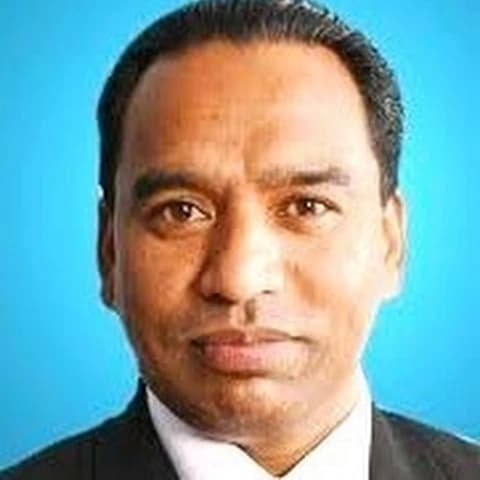
By;Asghar Ali Mubarak
ISLAMABAD; The Federal Minister for Finance and Revenue, Shaukat Tarin said that the country’s net public debt was on declining trend and reduced to 81.8 percent of debt-to-GDP ratio during the fiscal year 2020-21, expecting that it would come further down during the current fiscal year. Addressing a joint press conference along with Minister of State for Information and Broadcasting Farrukh Habib and SAPM on Food Security Jamshwd Iqbal Cheema here at PID Islamabad the Federal Minister for Finance and Revenue said that net debt was recorded at 86.8 percent of Gross Domestic Product (GDP) during fiscal year 2019 whereas it stood at 85.7 percent of GDP during FY2020, which indicated that it was on declining trend during the last three years of the incumbent government. The Federal Minister for Finance and Revenue, who was accompanied by Minister of State for Information Farrukh Habib and Special Assistant to Prime Minister on Food Security, Jamshed Cheema, however said that the debt was recorded at 74.1 percent of GDP during the fiscal year 2018.Explaining some underlining reasons for increase in public debt, the minister said that when Pakistan Tehreek-i-Insaf assumed power in 2018, it had to go to International Monetary Fund (IMF) programme, which he said led to devaluation of rupee from 104 to 167and increase in discount rate to 13.25.Hence, this enhanced debt servicing form Rs 1500 billion to Rs 2900 billion instantly, which enhanced the public debt, the minister added. Giving absolute figures of net debt during the last four years, the minister said that currently the country’s net debt stood at Rs39 trillion compared to the net debt of Rs35.6 trillion in Fy2020, Rs33 trillion during FY2019 and Rs25.7 trillion during FY2018.The Federal Minister for Finance and Revenue said that there has been gradual increase in foreign exchange reserves held by the State Bank of Pakistan. Briefing about inflation, the minister said the government had tried its best not to pass on international prices impact on people, saying that the prices of various commodities were still low as compared to international and regional markets. For example, sugar prices increased by 48 percent in international market but the government enhanced it only by 12 percent. Palm oil increased by 50 percent, but it went up on by 33 percent, wheat prices increased by 32 percent in one year and here it enhance only by 15 percent, prices of crude oil increased by 58 percent (from $44 to $70 per dollar) and in Pakistan it increased by only 9.39 per cent. The Federal Minister for Finance and Revenue said that increase in prices was an international issue right now. He said that in Pakistan, the Consumer price index (CPI) based inflation stood at 4.8 percent in 2018, which went up to 6.8 per cent in 2019 and then 10.74 percent in 2020 and reduced to 8.9 in 2021 and now it would remain at 8 percent during the current fiscal year. The Federal Minister for Finance and Revenue said that the prices of various essential commodities have considerably increased in international market, citing that sugar was sold at $303 per ton in 2018 now it is sold at $430 per ton. Likewise, wheat was sold at $188 per ton in 2018 now it is sold at $274 per ton while soyabean was at $775 per ton in 2018 and now it is sold at $1436 per ton, indicating a big jump. The palm oil prices increased from $621 per ton to $1136 per ton. The increase in international prices during the past couple of years was due to low food production and high demand owing to covid-19 and supply chain disruption. Federal Minister for Finance and Revenue said, in Pakistan, food inflation in July 2020 was 15.1 percent (Urban), 17.8 percent (Rural) now reduced to 10.2 percent (urban) and rural 9.1 (rural), showing around 5 percent decline in urban inflation and 7 percent in rural.
The Federal Minister for Finance and Revenue, however was of the view that Pakistan was linked to international market as it had to import, wheat, sugar, pulses, ghee, hence, the prices impact the local market.Federal Minister for Finance and Revenue said that there was need to enhance production, which he said was strategy of the government as it had already earmarked hefty amount for this purpose. In addition, he added, the government would make scientific engineering process to analyze profits in the supply chain and squeeze role of middleman administratively.In addition, Federal Minister for Finance and Revenue said, the government was also building strategic reserves to flood markets at time of need.In medium and long term, the government would build commodity warehouses, cold-storages so that farmers and purchasers are linked directly without involving middleman. The Federal Minister for Finance and Revenue said that the government also intended to provide targeted cash subsidy to around 40 percent of the poor population to buy essential items, adding that the subsidies would be provided for purchasing flour, sugar and pulses and data of Ehsaas would be utilized for this purpose to target deserving population .Federal Minister for Finance and Revenue said that government also intended to increase income and affordability of people to buy commodities, adding that the growth strategy introduced by the government was bearing fruit, adding that according to some observers, the economy was growing by around 6 percent. Federal Minister for Finance and Revenue said that Kamyab Pakistan Programme would also be launched this month with bottom approach to help low income people. He also termed then Sehat Card as a big initiative of PTI. The Federal Minister for Finance and Revenue while talking about State Owned Entities (SOEs) said these were earning net profit of around 204 billion which declined to net loss of Rs286 loss in 2018. During 2019, the first year of PTI government, the loss reduced to Rs143 billion. The minister said that around ten top loss-making enterprises account for 89 percent of the aggregate losses and therefore attention was focused on these SoEs including PIA, Pakistan Railways, Pakistan Steel Mills, Discos and ZTBL. Federal Minister for Finance and Revenue said that a board was being established in Privatization Commission to turn around these 10 SOEs. The board would be independent having world class professionals to stabilize these entities. Speaking on the occasion, Special Assistant to Prime Minister on Food Security, Jamshed Cheema said that government would provide cash subsidy to low income people to buy essential food products.
He said that the government would also launch a programme to help maintain prices and quality of milk in the country. He said that the government wanted to shift agriculture towards promising crops keeping in view the growing population and increasing demand for food.
More over Speaking on the occasion the Minister of State for Information and Broadcasting Farrukh Habib said on that, when in power, the focus of PML-N, PPP remained on money laundering, fake accounts and corruption instead of taking steps to increase production of the country and improve economy. He said that global commodity prices did not rise from 2008 to 2018 when PPP and PML-N ruled the country. He said since the outbreak of Covid 19, reduction in production was registered and logistics costs shot up which resulted in increase of prices of daily use commodities. He said according to the UNFAO report, from February 2020 to August 2021, food items prices have increased globally by 127 per cent. He said that Pakistan imported 70 cent of pulses and edible oil. The minister said due to prudent government policies, the full impact of global inflation has not been shifted to the consumers.
He said the present government was working on food security as it was vital for Pakistan as an agricultural country. He lamented that PML-N had set up sugar mills in cotton growing areas in the past and sugarcane cultivation had been started there which badly affected cotton production. The minister said that Rs 1,000 billion housing and commercial projects have been approved for low income and middle class with an economic impact of Rs 5,000 billion. The income of the working class has also increased during past couple of years, he said adding the laborer’s earning Rs. 500 to 600 a day in the past were now earning Rs 1000 per day and masons earning about Rs 1200 in the past were now earning Rs 2000 to 2500 per day. Today all power looms were active in Faisalabad, and more textile Mills were being built which was manifestation of good policies of the government. The world, he said has been appreciating the policy of Prime Minister Imran Khan to fight Covid 19, and The Economist lauded Pakistan’s handling of coronavirus. The opposition parties’ leaders he said, including Maryam Safdar and Bilawal Bhutto Zardari were demanding a complete lockdown from the beginning as they had no feelings for labour class and daily wage earners. Mechanism against profiteering and hoarding has been developed and data was being reviewed every week in collaboration with the provinces, he said.
Farrukh Habib said that Kamyab Jawan Programme, Low Income Housing Scheme and Sehat Insaf Card schemes were meant for low income groups. He revealed that banks received Rs 154 billion loan applications for construction of low-income houses, out of which Rs 60 billion loans have been approved. He said that State Bank of Pakistan was now providing capital of up to Rs 10 million to small and medium enterprises (SMEs) which will create innumerable employment opportunities in the country.