
Asghar Ali Mubarak

اندر کی بات

اصغر علی مبارک

Asghar Ali MubarakAAM NewsNew Generation's News Leader
AAM NEWSاے اے ایم نیوز
  • Home
  • Latest
  • pakistan
  • world
  • politics
  • diplomacy
  • Defence
  • sports
  • Science & Tech
  • Opinion

Loading content…

About AAM News

Asghar Ali Mubarak

اصغر علی مبارک

AAM News is an independent bilingual news platform from Pakistan, delivering factual reporting and analysis in English and Urdu.

اے اے ایم نیوز پاکستان کا ایک آزاد دو لسانی نیوز پلیٹ فارم ہے جو انگریزی اور اردو میں درست خبریں اور تجزیے پیش کرتا ہے۔

Explore AAM News

  • About & Contact
  • Latest News
  • All Categories
  • YouTube Videos
  • Facebook
  • Instagram

Contact

  • asgharalimubarak@yahoo.com
  • +92 333 4911786
  • WhatsApp +92 333 4911786

Follow

Developed By

Website developed by Zulqarnain Basher at YFC Solution.

Digital products, websites and software solutions

© 2026 Asghar Ali Mubarak. All rights reserved.

WhatsApp +92 333 4911786. Email asgharalimubarak@yahoo.com. Call +92 333 4911786.WhatsApp
  1. Home
  2. News
  3. politics
  4. ”AUSTRALIAN HIGH COMMISSIONER ” HOSTS CRICKET WORLD CUP EXHIBITION (By, ASGHAR ALI MUBARAK) The Australian High Commissioner to Pakistan, H.E.Ms. Margaret Adamson, hosted an exhibition of photographs from the 1992 Cricket World Cup played in Australia.“1992 was a tournament of firsts. The first World Cup played in Australia. The first appearance of colored kit, white balls and night cricket. And, most importantly, the first World Cup collected by Pakistan,” Ms Adamson said.“This wonderful exhibition of photos by Iqbal Munir captures the ecstasy of the Pakistani players during that victory over the English,” she said. H.E.Ms. Margaret Adamson, noted that although Australia and Pakistan were fierce competitors on the field, cricket was a unifying passion for the two countries. “Every summer, more than a million Australians play the game, and you see the same enthusiasm here in Pakistan. On every street, in every open space, youngsters are out hitting the ball, grabbing a wicket, being part of the team,” she said. “Pakistan has produced some of the game’s true champions: Imran Khan, the best of skippers; Shahid Afridi, who hit more sixes than anyone else in one-day internationals; Sarfraz Nawaz, Wasim Akram and Waqar Younis, who pioneered reverse swing,” she said. The exhibition of work by Iqbal Munir, a widely travelled cricket photographer and enthusiast, will be open to public on 14 and 15 May at Dolmen Mall, Karachi. “What happened on the field in 1992 might be etched in the memory of every cricket fan in the country and is refreshed every four years by the barrage of video clips and pictures that flood social media and television screens,” Mr Munir said.“Few know what happened behind the scenes. As the team’s official photographer, I trailed the cricketers closely, capturing every move and emotion that shed light on their state of mind and let us recall the intimate details that led to the momentous victory,” he said.Iqbal Munir is the son of late cricket commentator and journalist Munir Hussain. His World Cup photographs are compiled in the book, Pakistan: World Champions. In 1987, he also wrote An Eye on Imran. The 1992 Cricket World Cup was the fifth staging of the Cricket World Cup, organized by the International Cricket Council (ICC). It was held in Australia and New Zealand from 22 February to 25 March 1992, and finished with Pakistan beating England by 22 runs in the final to become the World Cup champions for the first time. The 1992 World Cup was the first to feature colored player clothing, white cricket balls and black sight screens with a number of matches being played under floodlights. The 1992 World Cup was also the first to be held in the Southern Hemisphere. It was also the first World Cup to include South Africa, who had been allowed to re-join the International Cricket Council as a Test-playing nation after the end of apartheid. The format was changed from previous tournaments, with a complete round-robin replacing the former two qualifying groups. The initial draw was released with eight competing countries and 28 round-robin matches, plus two semi-finals and a final. In late 1991, South Africa were re-admitted to the International Cricket Council after 21 years of exclusion due to apartheid, and the draw was amended to include them, adding another eight matches to the round-robin. The rule for calculating the target score for the team batting second in rain-affected matches was also changed. The previous rule (the Average Run Rate method) simply multiplied the run rate of the team batting first by the number of overs available to the team batting second, but this rule had been deemed to give an unfair advantage to the team batting second. In an attempt to rectify this, the target score would now be calculated by the Most Productive Overs method. In this system, if the team batting second had 44 over available, their target score would be one greater than the 44 highest scoring over of the team batting first. While the reasoning behind the system was sound, the timing of rain interruptions remained problematic: as the semi-final between England and South Africa demonstrated, where a difficult but eminently reachable 22 runs off 13 balls was reduced to 22 runs off 7 (the least productive over, a maiden, being deducted) and finally, a preposterous 21 off 1 ball (the next least productive over having given 1 run). It was seen that, if the interruption came during the second innings, the side batting second was at a significant disadvantage – one which was only overcome once, in fact, in England’s group-stage victory over South Africa. The 1992 World Cup featured the seven Test teams at that time. For the first time; South Africa competed as the eighth full member of the ICC, and would play their first Test in 22 years in the West Indies a month after the World Cup. Zimbabwe appeared for the third time, having qualified by winning the 1990 ICC Trophy defeating the Netherlands in the final for the second time. Zimbabwe would gain full member status following the tournament and play their first Test match later in 1992. Teams who entered were.
  • politics

”AUSTRALIAN HIGH COMMISSIONER ” HOSTS CRICKET WORLD CUP EXHIBITION (By, ASGHAR ALI MUBARAK) The Australian High Commissioner to Pakistan, H.E.Ms. Margaret Adamson, hosted an exhibition of photographs from the 1992 Cricket World Cup played in Australia.“1992 was a tournament of firsts. The first World Cup played in Australia. The first appearance of colored kit, white balls and night cricket. And, most importantly, the first World Cup collected by Pakistan,” Ms Adamson said.“This wonderful exhibition of photos by Iqbal Munir captures the ecstasy of the Pakistani players during that victory over the English,” she said. H.E.Ms. Margaret Adamson, noted that although Australia and Pakistan were fierce competitors on the field, cricket was a unifying passion for the two countries. “Every summer, more than a million Australians play the game, and you see the same enthusiasm here in Pakistan. On every street, in every open space, youngsters are out hitting the ball, grabbing a wicket, being part of the team,” she said. “Pakistan has produced some of the game’s true champions: Imran Khan, the best of skippers; Shahid Afridi, who hit more sixes than anyone else in one-day internationals; Sarfraz Nawaz, Wasim Akram and Waqar Younis, who pioneered reverse swing,” she said. The exhibition of work by Iqbal Munir, a widely travelled cricket photographer and enthusiast, will be open to public on 14 and 15 May at Dolmen Mall, Karachi. “What happened on the field in 1992 might be etched in the memory of every cricket fan in the country and is refreshed every four years by the barrage of video clips and pictures that flood social media and television screens,” Mr Munir said.“Few know what happened behind the scenes. As the team’s official photographer, I trailed the cricketers closely, capturing every move and emotion that shed light on their state of mind and let us recall the intimate details that led to the momentous victory,” he said.Iqbal Munir is the son of late cricket commentator and journalist Munir Hussain. His World Cup photographs are compiled in the book, Pakistan: World Champions. In 1987, he also wrote An Eye on Imran. The 1992 Cricket World Cup was the fifth staging of the Cricket World Cup, organized by the International Cricket Council (ICC). It was held in Australia and New Zealand from 22 February to 25 March 1992, and finished with Pakistan beating England by 22 runs in the final to become the World Cup champions for the first time. The 1992 World Cup was the first to feature colored player clothing, white cricket balls and black sight screens with a number of matches being played under floodlights. The 1992 World Cup was also the first to be held in the Southern Hemisphere. It was also the first World Cup to include South Africa, who had been allowed to re-join the International Cricket Council as a Test-playing nation after the end of apartheid. The format was changed from previous tournaments, with a complete round-robin replacing the former two qualifying groups. The initial draw was released with eight competing countries and 28 round-robin matches, plus two semi-finals and a final. In late 1991, South Africa were re-admitted to the International Cricket Council after 21 years of exclusion due to apartheid, and the draw was amended to include them, adding another eight matches to the round-robin. The rule for calculating the target score for the team batting second in rain-affected matches was also changed. The previous rule (the Average Run Rate method) simply multiplied the run rate of the team batting first by the number of overs available to the team batting second, but this rule had been deemed to give an unfair advantage to the team batting second. In an attempt to rectify this, the target score would now be calculated by the Most Productive Overs method. In this system, if the team batting second had 44 over available, their target score would be one greater than the 44 highest scoring over of the team batting first. While the reasoning behind the system was sound, the timing of rain interruptions remained problematic: as the semi-final between England and South Africa demonstrated, where a difficult but eminently reachable 22 runs off 13 balls was reduced to 22 runs off 7 (the least productive over, a maiden, being deducted) and finally, a preposterous 21 off 1 ball (the next least productive over having given 1 run). It was seen that, if the interruption came during the second innings, the side batting second was at a significant disadvantage – one which was only overcome once, in fact, in England’s group-stage victory over South Africa. The 1992 World Cup featured the seven Test teams at that time. For the first time; South Africa competed as the eighth full member of the ICC, and would play their first Test in 22 years in the West Indies a month after the World Cup. Zimbabwe appeared for the third time, having qualified by winning the 1990 ICC Trophy defeating the Netherlands in the final for the second time. Zimbabwe would gain full member status following the tournament and play their first Test match later in 1992. Teams who entered were.

Asghar Ali Mubarak portrait

By Asghar Ali Mubarak

Published 14 May 2019 · Updated 14 May 2019 · 1 min read

”AUSTRALIAN HIGH COMMISSIONER ” HOSTS CRICKET WORLD CUP EXHIBITION                                (By, ASGHAR ALI MUBARAK) The Australian High Commissioner to Pakistan, H.E.Ms. Margaret Adamson, hosted an exhibition of photographs from the 1992 Cricket World Cup played in Australia.“1992 was a tournament of firsts. The first World Cup played in Australia. The first appearance of colored kit, white balls and night cricket. And, most importantly, the first World Cup collected by Pakistan,” Ms Adamson said.“This wonderful exhibition of photos by Iqbal Munir captures the ecstasy of the Pakistani players during that victory over the English,” she said. H.E.Ms. Margaret Adamson, noted that although Australia and Pakistan were fierce competitors on the field, cricket was a unifying passion for the two countries. “Every summer, more than a million Australians play the game, and you see the same enthusiasm here in Pakistan. On every street, in every open space, youngsters are out hitting the ball, grabbing a wicket, being part of the team,” she said. “Pakistan has produced some of the game’s true champions: Imran Khan, the best of skippers; Shahid Afridi, who hit more sixes than anyone else in one-day internationals; Sarfraz Nawaz, Wasim Akram and Waqar Younis, who pioneered reverse swing,” she said. The exhibition of work by Iqbal Munir, a widely travelled cricket photographer and enthusiast, will be open to public on 14 and 15 May at Dolmen Mall, Karachi. “What happened on the field in 1992 might be etched in the memory of every cricket fan in the country and is refreshed every four years by the barrage of video clips and pictures that flood social media and television screens,” Mr Munir said.“Few know what happened behind the scenes. As the team’s official photographer, I trailed the cricketers closely, capturing every move and emotion that shed light on their state of mind and let us recall the intimate details that led to the momentous victory,” he said.Iqbal Munir is the son of late cricket commentator and journalist Munir Hussain. His World Cup photographs are compiled in the book, Pakistan: World Champions. In 1987, he also wrote An Eye on Imran. The 1992 Cricket World Cup was the fifth staging of the Cricket World Cup, organized by the International Cricket Council (ICC). It was held in Australia and New Zealand from 22 February to 25 March 1992, and finished with Pakistan beating England by 22 runs in the final to become the World Cup champions for the first time. The 1992 World Cup was the first to feature colored player clothing, white cricket balls and black sight screens with a number of matches being played under floodlights. The 1992 World Cup was also the first to be held in the Southern Hemisphere. It was also the first World Cup to include South Africa, who had been allowed to re-join the International Cricket Council as a Test-playing nation after the end of apartheid. The format was changed from previous tournaments, with a complete round-robin replacing the former two qualifying groups. The initial draw was released with eight competing countries and 28 round-robin matches, plus two semi-finals and a final. In late 1991, South Africa were re-admitted to the International Cricket Council after 21 years of exclusion due to apartheid, and the draw was amended to include them, adding another eight matches to the round-robin. The rule for calculating the target score for the team batting second in rain-affected matches was also changed. The previous rule (the Average Run Rate method) simply multiplied the run rate of the team batting first by the number of overs available to the team batting second, but this rule had been deemed to give an unfair advantage to the team batting second. In an attempt to rectify this, the target score would now be calculated by the Most Productive Overs method. In this system, if the team batting second had 44 over available, their target score would be one greater than the 44 highest scoring over of the team batting first. While the reasoning behind the system was sound, the timing of rain interruptions remained problematic: as the semi-final between England and South Africa demonstrated, where a difficult but eminently reachable 22 runs off 13 balls was reduced to 22 runs off 7 (the least productive over, a maiden, being deducted) and finally, a preposterous 21 off 1 ball (the next least productive over having given 1 run). It was seen that, if the interruption came during the second innings, the side batting second was at a significant disadvantage – one which was only overcome once, in fact, in England’s group-stage victory over South Africa. The 1992 World Cup featured the seven Test teams at that time. For the first time; South Africa competed as the eighth full member of the ICC, and would play their first Test in 22 years in the West Indies a month after the World Cup. Zimbabwe appeared for the third time, having qualified by winning the 1990 ICC Trophy defeating the Netherlands in the final for the second time. Zimbabwe would gain full member status following the tournament and play their first Test match later in 1992. Teams who entered were.

Share

  • Facebook
  • X
  • LinkedIn
  • WhatsApp
  • Telegram
  • Reddit
  • Pinterest
  • email
  • Blogger

Related coverage

More reports you may want to read next.

(علیزہ شمشاد چوہدری )برین ڈرین اور نوجوانوں کا مستقبل

News

(علیزہ شمشاد چوہدری )برین ڈرین اور نوجوانوں کا مستقبل

برین ڈرین اور نوجوانوں کا مستقبل: (علیزہ شمشاد چوہدری ) ہوائی اڈوں کے ڈیپارچر لاؤنجز میں چھائی اداسی، آنکھوں میں تیرتے آ…

1 Aug 2026

Brain Drain and the Future of Youth:(Aliza Shamshad Chaudhry)

News

Brain Drain and the Future of Youth:(Aliza Shamshad Chaudhry)

Brain Drain and the Future of Youth: (Aliza Shamshad Chaudhry) The sadness in the departure lounges of airports, tears i…

1 Aug 2026 · Updated 1 Aug 2026

دوسرے ٹیسٹ میچ میں قومی ہاکی ٹیم کی جارحانہ کھیل سے جنوبی کوریا کو 1-3 سے شکست

News

دوسرے ٹیسٹ میچ میں قومی ہاکی ٹیم کی جارحانہ کھیل سے جنوبی کوریا کو 1-3 سے شکست

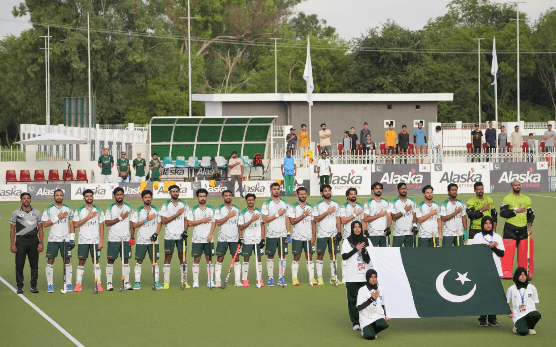
پاکستان ہاکی فیڈریشن (پی ایچ ایف) کے زیرِ اہتمام نصیر بندہ ہاکی اسٹیڈیم اسلام آباد میں جاری چار میچوں کی تاریخی دو طرفہ…

1 Aug 2026

AdvertisementSlice 'n' Story pizza restaurant — open location in Google Maps
AdvertisementYFC Solution professional websites and digital services

Latest News

  • (علیزہ شمشاد چوہدری )برین ڈرین اور نوجوانوں کا مستقبل
    (علیزہ شمشاد چوہدری )برین ڈرین اور نوجوانوں کا مستقبل

    1 Aug 2026

  • Brain Drain and the Future of Youth:(Aliza Shamshad Chaudhry)
    Brain Drain and the Future of Youth:(Aliza Shamshad Chaudhry)

    1 Aug 2026

  • دوسرے ٹیسٹ میچ میں قومی ہاکی ٹیم کی جارحانہ کھیل سے جنوبی کوریا کو 1-3 سے شکست
    دوسرے ٹیسٹ میچ میں قومی ہاکی ٹیم کی جارحانہ کھیل سے جنوبی کوریا کو 1-3 سے شکست

    1 Aug 2026

  • Pakistan Outclasses South Korea 3-1 to Claim Historic 2-0 Lead in Islamabad Hockey Test Series
    Pakistan Outclasses South Korea 3-1 to Claim Historic 2-0 Lead in Islamabad Hockey Test Series

    1 Aug 2026

  • جی ایچ کیو میں چین کی پیپلز لبریشن آرمی (پی ایل اے)کی 99ویں سالگرہ کی تقریب،
    جی ایچ کیو میں چین کی پیپلز لبریشن آرمی (پی ایل اے)کی 99ویں سالگرہ کی تقریب،

    1 Aug 2026

Categories

  • Breaking News23
  • pakistan18
  • world5
  • politics3157
  • diplomacy16
  • Defence14
  • sports21
  • Science & Technology10
  • Environment1
  • Law & Justice1
  • Opinion3
  • کالم اندر کی بات5
  • Islamic1

Editor's Picks

  • (علیزہ شمشاد چوہدری )برین ڈرین اور نوجوانوں کا مستقبل
  • Brain Drain and the Future of Youth:(Aliza Shamshad Chaudhry)
  • دوسرے ٹیسٹ میچ میں قومی ہاکی ٹیم کی جارحانہ کھیل سے جنوبی کوریا کو 1-3 سے شکست
  • Pakistan Outclasses South Korea 3-1 to Claim Historic 2-0 Lead in Islamabad Hockey Test Series
  • جی ایچ کیو میں چین کی پیپلز لبریشن آرمی (پی ایل اے)کی 99ویں سالگرہ کی تقریب،

About the Author

Asghar Ali Mubarak portrait

Asghar Ali Mubarak

Asghar Ali Mubarak is a bilingual journalist covering politics, sports, diplomacy, and current affairs.

About & Contact