

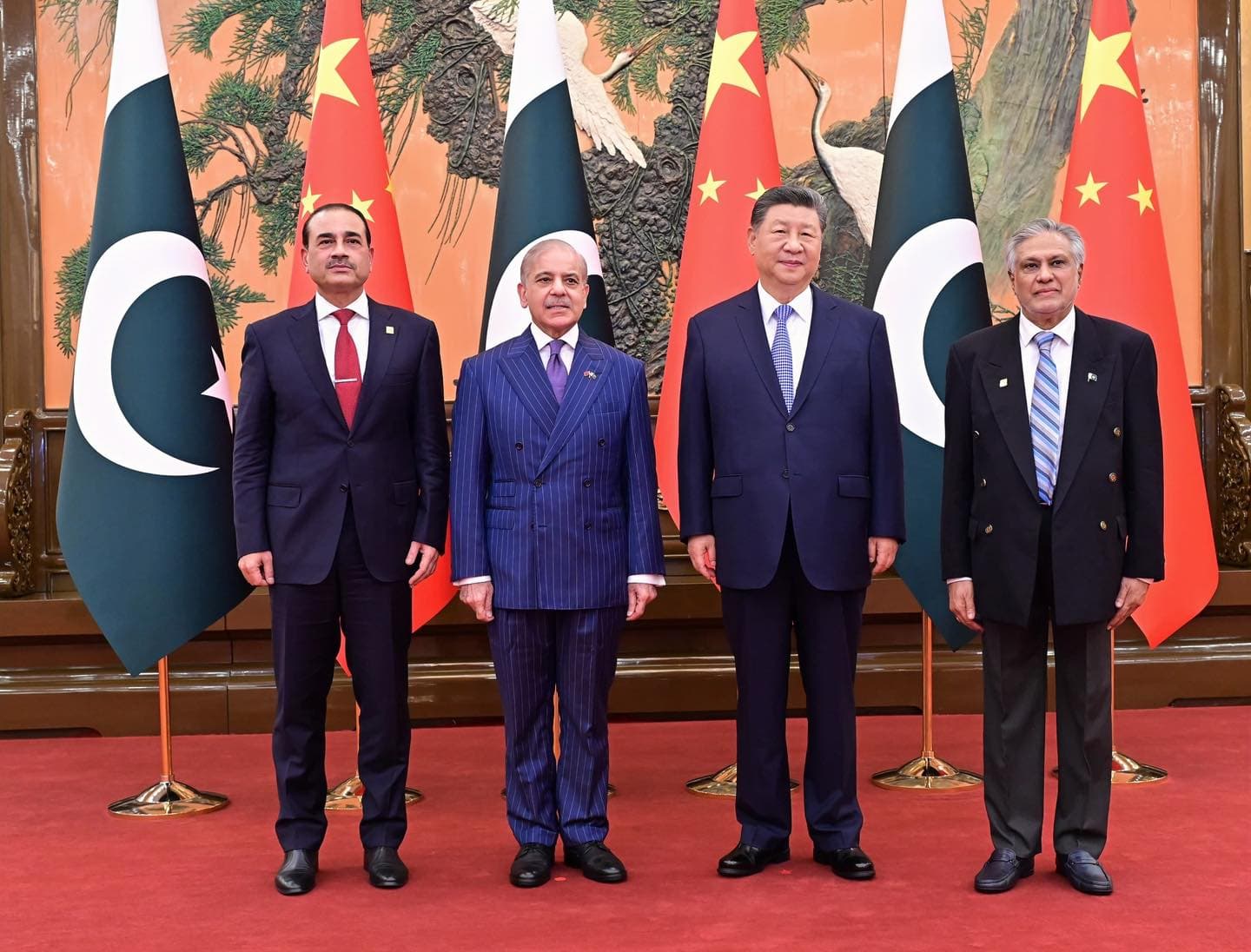
Pakistan and China’s iron resolve against terrorism”….پاکستان اور چین کا دہشت گردی کے خلاف آہنی عزم” …..( اصغر علی مبارک) …. پاکستان اور چین نے دہشت گردی کے خلاف “زیرو ٹالرنس” کی پالیسی اپناتے ہوئے مشترکہ سیکیورٹی پارٹنرشپ قائم کرنے پر اتفاق کیا ہے
پاکستان اور چین نے دہشت گردی کے خلاف “زیرو ٹالرنس” کی پالیسی کو مزید وسعت دیتے ہوئے بیجنگ میں ایک نئے مشترکہ سیکیورٹی میکانزم پر دستخط کیے ہیں، جس کا مقصد پاکستان میں مقیم چینی شہریوں، منصوبوں اور اداروں کو فول پروف تحفظ فراہم کرنا ہے۔
یہ عزم انسدادِ دہشت گردی کے شعبے میں دونوں ممالک کے درمیان اسٹریٹجک شراکت داری کو ایک نئی بلندی پر لے گیا ہے۔
مشترکہ سیکیورٹی روابط اور حالیہ اقدامات;
مشترکہ سیکیورٹی کمپنی کا قیام: پاکستان اور چین نے پاکستان میں چینی عملے کے تحفظ کے لیے مشترکہ انسدادِ دہشت گردی اور سیکیورٹی کمپنی قائم کرنے کے معاہدے پر دستخط کیے ہیں۔
انٹیلی جنس شیئرنگ:
وفاقی دارالحکومت میں دونوں ممالک کے متعلقہ اداروں کے درمیان براہِ راست انٹیلی جنس شیئرنگ اور مشترکہ آپریشنل مانیٹرنگ کو فعال کیا گیا ہے۔
جدید ٹیکنالوجی کا استعمال:
سی پیک (CPEC) کے تمام اہم روٹس اور گوادر پورٹ پر چینی سیکیورٹی ماہرین کی مشاورت سے جدید ترین سرویلنس اور ڈرون ٹیکنالوجی نصب کی جا رہی ہے۔
کالعدم تنظیموں کے خلاف گھیرا تنگ:
بی ایل اے (BLA)، ٹی ٹی پی (TTP) اور ای ٹی آئی ایم (ETIM) جیسے نیٹ ورکس کے خاتمے کے لیے دونوں ممالک نے علاقائی اور بین الاقوامی سطح پر سفارتی و عسکری دباؤ بڑھانے پر اتفاق کیا ہے,
علاقائی صورتحال پر اسٹریٹجک ہم آہنگی :
دونوں ممالک نے کابل انتظامیہ پر زور دیا ہے کہ وہ اپنی سرزمین کو پاکستان اور چین کے خلاف استعمال ہونے سے روکنے کے لیے عملی اور ٹھوس اقدامات کرے۔
عسکری مشقیں:
دہشت گردوں کے ٹھکانوں کو نشانہ بنانے اور ہائی جیکنگ جیسے حالات سے نمٹنے کے لیے پاک چین افواج کی مشترکہ انسدادِ دہشت گردی مشقوں کے دائرہ کار کو مزید بڑھایا جا رہا ہے,
وزیراعظم شہباز شریف کے دورۂ چین کے اختتام پر جاری ہونے والا پاک چین مشترکہ اعلامیہ خطے سے دہشت گردی کے خاتمے کے لیے ایک تاریخی سنگِ میل ہے۔ دونوں ممالک نے خطے کی ترقی، سی پیک 2.0 کے تحفظ اور شرپسند عناصر کی سرکوبی کے لیے اپنی انٹیلیجنس اور دفاعی روابط کو نئی بلندیوں پر پہنچانے کا عزم ظاہر کیا ہے۔”
اسٹریٹجک شراکت داروں کا تحفظ اور اندرونی استحکام ہی دراصل پاکستان کی معاشی بقا اور روشن مستقبل کی ضمانت ہے۔
پاکستان اور چین کے مابین دہشت گردی کے خلاف “زیرو ٹالرنس” کی پالیسی پر دستخط، گوادر پورٹ کی چار تہوں پر مشتمل نئی سیکیورٹی اور پنجاب بھر میں “ہائی سیکیورٹی زونز ایکٹ” کا نفاذ اس بات کا واضح ثبوت ہے کہ ریاست اب اندرونی و بیرونی خطرات سے نمٹنے کے لیے روایتی طرزِ عمل ترک کر کے ایک انتہائی جدید اور مربوط سیکیورٹی فریم ورک اپنا رہی ہے
پاکستان کو اس وقت کثیر الجہتی چیلنجز کا سامنا ہے۔ ایک طرف سی پیک (CPEC) اور نان سی پیک منصوبوں پر کام کرنے والے چینی ماہرین کو نشانہ بنا کر ملک میں غیر ملکی سرمایہ کاری اور پاک چین لازوال دوستی کو سبوتاژ کرنے کی ناپاک سازشیں کی جا رہی ہیں، تو دوسری طرف سیاسی تناؤ، احتجاجی لہروں اور دھرنوں کی وجہ سے اہم ترین انتظامی اور عدالتی مراکز کو مفلوج کرنے کی کوششیں روز کا معمول بن چکی ہیں۔
ضرورت اس امر کی ہے کہ جہاں اسپیشل پروٹیکشن یونٹ (SPU) اور پاک فوج کا اسپیشل سیکیورٹی ڈویژن (SSD) ملک گیر اور ضلعی سطح پر جدید ٹیکنالوجی، ڈرون سرویلنس اور بائیومیٹرک سسٹمز کے ذریعے سیکیورٹی نیٹ ورک کو مضبوط بنا رہے ہیں وہیں اس بات کو بھی یقینی بنایا جائے کہ عام شہریوں، پرامن تاجروں اور سائلین کو ان ہائی سیکیورٹی زونز تک رسائی میں بلاجواز ہراساں نہ کیا جائے۔ سیکیورٹی کو “ہراساں کیے بغیر” بنانا ہی اس نئے ایکٹ کی اصل کامیابی ہوگی حکومت کو چاہیے کہ وہ ان ریڈ زونز کی حدود اور عوامی اجتماعات کے لیے متبادل مخصوص مقامات کے بارے میں عوام کو مسلسل آگاہ رکھے تاکہ کسی بھی قسم کی غلط فہمی یا تصادم سے بچا جا سکے گوادر پورٹ کے لیے پاکستان اور چین کے حالیہ سیکیورٹی معاہدے کے تحت ایک کثیر الجہتی اور انتہائی سخت حفاظتی نظام نافذ کیا گیا ہے۔
اس نئے سیکیورٹی میکانزم کا بنیادی مقصد گوادر بندرگاہ، وہاں موجود چینی ماہرین، سمندری تجارتی راستوں اور سی پیک (CPEC) کے انفراسٹرکچر کو ہر قسم کے اندرونی و بیرونی خطرات سے محفوظ رکھنا ہے۔
حالیہ فیصلوں کے مطابق گوادر پورٹ پر نافذ کیے جانے والے اہم حفاظتی اقدامات کی تفصیلات درج ذیل ہیں:
1۔ چار تہوں پر مشتمل حفاظتی منصوبہ (Four-Layer Security Plan)گوادر پورٹ اور اس سے منسلک تجارتی راستوں کے لیے سیکیورٹی کو مزید سخت کرتے ہوئے چار تہوں (Layers) پر مشتمل سیکیورٹی پلان فعال کیا گیا ہے:
پہلی تہہ (اندرونی سیکیورٹی): بندرگاہ کے اندرونی حصوں اور تنصیبات کی حفاظت۔
دوسری تہہ (پیری میٹر سیکیورٹی): پورٹ کے ارد گرد کے بیرونی حصوں اور داخلی راستوں کی کڑی نگرانی۔
تیسری تہہ (شہری سیکیورٹی): گوادر شہر اور چینی رہائشی علاقوں کے اطراف میں پٹرولنگ۔چوتھی تہہ (علاقائی و شاہراہوں کی سیکیورٹی): مکران کوسٹل ہائی وے اور گوادر کو ملانے والے زمینی راستوں کا تحفظ۔.
2۔ خصوصی فورسز کی تعیناتی اور ٹاسک فورس 88 ;
اسپیشل سیکیورٹی ڈویژن (SSD): پاک فوج کی قیادت میں قائم خصوصی سیکیورٹی ڈویژن کے ہزاروں تربیت یافتہ اہلکار گوادر میں چینی عملے اور پراجیکٹس کی زمینی حفاظت پر مامور ہیں۔
ٹاسک فورس 88 (TF-88): پاکستان نیوی کی یہ خصوصی ٹاسک فورس گوادر پورٹ کی سمندری حدود (Seaward Security) کی نگرانی کرتی ہے تاکہ بحری جہازوں کی آمد و رفت محفوظ رہے اور کسی بھی بحری حملے کو روکا جا سکے۔
3۔ سیف سٹی پراجیکٹ اور جدید ٹیکنالوجی کا استعمال;
گوادر کو “سیف سٹی پراجیکٹ” کے تحت جدید ترین ہائی ڈیفینیشن (HD) کیمروں اور چہروں کی شناخت کرنے والے (Facial Recognition) سافٹ ویئرز سے لیس کیا جا رہا ہے۔
ڈرون سرویلنس: پورٹ کے آس پاس کے پہاڑی سلسلوں اور سمندری ساحلوں کی فضائی نگرانی کے لیے چوبیس گھنٹے ڈرون ٹیکنالوجی کا استعمال کیا جا رہا ہے۔
مشترکہ مانیٹرنگ سینٹر:
پاکستان اور چین کے سیکیورٹی ماہرین کے درمیان براہِ راست انٹیلیجنس شیئرنگ کے لیے ایک مشترکہ آپریشنل کمانڈ سینٹر قائم کیا گیا ہے۔
4۔ نادرا (NADRA) کا بائیومیٹرک رجسٹریشن سسٹم;
گوادر میں داخل ہونے اور وہاں رہنے والے تمام غیر ملکی شہریوں، خصوصاً چینی انجینئرز اور ورکرز کا نادرا کے پاس مکمل بائیومیٹرک ریکارڈ موجود ہوتا ہے۔پورٹ کے حساس علاقوں میں کسی بھی عام شہری یا گاڑی کو سخت بائیومیٹرک تصدیق کے بغیر داخلے کی اجازت نہیں دی جاتی۔
5۔ بین الاقوامی میری ٹائم کوڈ پر عملدرآمدگوادر پورٹ پر انٹرنیشنل شپ اینڈ پورٹ فیسیلیٹی سیکیورٹی کے عالمی معیارات کو سختی سے لاگو کیا گیا ہے، جو بین الاقوامی بحری جہازوں اور پورٹ تنصیبات کو دہشت گردی اور تخریب کاری سے بچانے کا ایک عالمی سیکیورٹی پروتوکول ہے۔
وزیراعظم پاکستان محمد شہباز شریف کا کامیاب دورۂ چین لازوال دوستی کی عکاس ہے, وزیراعظم کے سرکاری دورۂ چین کے موقع پر دونوں ممالک کے درمیان ملاقاتوں، معاہدوں اور مفاہمتی یادداشتوں (MoUs) پر مشتمل ایک جامع مشترکہ اعلامیہ جاری کیا گیا ہے۔ اس دورے کے دوران پاک چین سفارتی تعلقات کی 75 ویں سالگرہ کی تقریبات بھی منعقد کی گئیں، جو دونوں ممالک کی دیرینہ اور لازوال دوستی کی عکاس ہیں۔
قیادت کی سطح پر اہم ملاقاتیں;
وزیراعظم شہباز شریف نے اپنے چار روزہ دورے کے دوران چین کی اعلیٰ قیادت سے انتہائی اہم ملاقاتیں کیں، جن میں شامل ہیں:
چائنیز صدر شی جن پنگ سے تفصیلی ملاقات۔;
چینی وزیراعظم لی چیانگ سے وفود کی سطح پر مذاکرات۔;
دونوں ممالک کے درمیان اسٹریٹجک تعاون کو مزید مستحکم کرنے پر مکمل اتفاق۔;
دہشت گردی کے خلاف سخت اور واضح پیغام;
مشترکہ اعلامیے کا سب سے اہم پہلو علاقائی سلامتی اور دہشت گردی کے خلاف دونوں ممالک کا دوٹوک مؤقف ہے:
کالعدم تحریک طالبان پاکستان (TTP)، ایسٹ ترکستان اسلامک موومنٹ (ETIM) یا کسی بھی دوسرے گروہ کو دہشت گردی کی سرگرمیوں کی اجازت نہیں دی جائے گی۔کسی بھی تنظیم یا گروہ کو کسی دوسرے ملک کی زمین استعمال کر کے علاقائی سلامتی کو نقصان پہنچانے کا موقع نہیں دیا جائے گا۔
افغانستان کی صورتحال پر دونوں ممالک نے ایک دوسرے کے ساتھ قریبی اور مسلسل رابطہ رکھنے کا فیصلہ کیا ہے۔
سفارتی یکجہتی اور خودمختاری کی حمایت;
ون چائنا پالیسی: پاکستان نے چین کی “ون چائنا پالیسی” پر اپنی روایتی اور غیر متزلزل حمایت کا اعادہ کرتے ہوئے تائیوان کے معاملے پر بیجنگ کے مؤقف کی مکمل تائید کی۔
پاکستان کا دفاع و سلامتی: چین نے پاکستان کی خودمختاری، علاقائی سالمیت اور سلامتی کے لیے اپنی مستقل اور مضبوط حمایت کا یقین دلایا۔
سی پیک 2.0 (CPEC) اور معاشی و صنعتی تعاون;
اعلامیے کے مطابق پاک چین اقتصادی راہداری کے اگلے مرحلے (CPEC 2.0) کی اعلیٰ معیار کی ترقی پر اتفاق کیا گیا ہے:گوادر پورٹ: گوادر بندرگاہ کو علاقائی تجارتی اور رابطہ مرکز
(Regional Connectivity Hub) بنایا جائے گا۔
شاہراہِ قراقرم: قراقرم ہائی وے کے تھاکوٹ تا رائیکوٹ منصوبے کو مرحلہ وار ترجیحی بنیادوں پر مکمل کیا جائے گا۔خنجراب پاس:
خنجراب کے ذریعے دونوں ممالک کے درمیان زمینی رابطوں اور تجارت کو مزید پائیدار بنایا جائے گا۔
صنعتی و معدنیاتی شراکت داری:
ٹیکسٹائل، ہوم اپلائنسز، معدنیات، اور تیل و گیس (Oil & Gas) کے شعبوں میں صنعتی تعاون کو تیز کیا جائے گا۔
تیسرے فریق کی شمولیت:
پاکستان اور چین نے دیگر دوست ممالک کو بھی سی پیک کے منافع بخش منصوبوں میں شمولیت کی باضابطہ دعوت دی ہے۔
وزیراعظم شہبازشریف نے چینی صدر شی جن پنگ اور وزیراعظم لی چیانگ سے ملاقاتیں کیں،
وزیراعظم شہباز شریف کے دورہ چین کے موقع پر پاکستان اور چین کے درمیان 75 سالہ سفارتی تعلقات کی تقریبات منعقد کی گئی۔ مشترکہ اعلامیے کے مطابق دونوں ممالک نے افغانستان کے معاملے پر ایک دوسرے سے قریبی رابطہ رکھنے پر اتفاق کیا اور پاکستان اور چین کے درمیان اسٹریٹجک تعاون مزید مضبوط بنانے پر اتفاق کیا گیا۔
مشترکہ اعلامیے میں کہا گیا ہے کہ کالعدم ٹی ٹی پی، ایسٹ ترکستان اسلامک موومنٹ (ای ٹی آئی ایم) اور کسی گروہ کو کوئی زمین استعمال کرکےعلاقائی سلامتی کونقصان پہنچانے کی اجازت نہیں دی جائے گی، کسی گروہ کو دہشتگردی کی سرگرمیاں کرنے کی بھی اجازت نہیں دی جائے گی۔مشترکہ اعلامیے کے مطابق پاکستان نے ون چائنا پالیسی پر مکمل حمایت کا اعادہ کیا اور کہا کہ پاکستان تائیوان کے معاملے پر چین کی مکمل حمایت کرتا ہے۔
دوسری جانب چین نے پاکستان کی خودمختاری اور سلامتی کیلئے غیر متزلزل حمایت کا اعادہ کیا اور سی پیک 2.0 کے اعلیٰ معیار کی ترقی اور گوادر پورٹ کو علاقائی رابطہ مرکز بنانے پر اتفاق کیا گیا۔
اعلامیے کے مطابق قراقرم ہائی وے تھاکوٹ رائیکوٹ منصوبہ مرحلہ وار مکمل کرنے، خنجراب پاس کےذریعے پاک چین زمینی رابطے مزید مضبوط بنانے کا فیصلہ کیا گیا، دیگر ممالک کو بھی سی پیک منصوبوں میں شمولیت کی دعوت دی گئی ہے جبکہ ٹیکسٹائل اور ہوم اپلائنسز کے شعبوں میں صنعتی تعاون بڑھانے پر اتفاق کیا گیا
اعلامیے کے مطابق قراقرم ہائی وے تھاکوٹ رائیکوٹ منصوبہ مرحلہ وار مکمل کرنے، خنجراب پاس کےذریعے پاک چین زمینی رابطے مزید مضبوط بنانے کا فیصلہ کیا گیا، دیگر ممالک کو بھی سی پیک منصوبوں میں شمولیت کی دعوت دی گئی ہے جبکہ ٹیکسٹائل اور ہوم اپلائنسز کے شعبوں میں صنعتی تعاون بڑھانے پر اتفاق کیا گیا اور پاکستان اور چین کے درمیان معدنیات، تیل و گیس شعبوں میں تعاون بڑھانے کا فیصلہ کیا گیا وزیراعظم کے دورہ چین میں پاکستان اور چین کی کمپنیوں کےدرمیان 7 ارب ڈالر سے زائدکے معاہدوں اور ایم او یوز پر دستخط کیےگئے۔ پاکستان اور چین کی کمپنیوں کےدرمیان تعاون اور سرمایہ کاری کے فروغ کے لیے7 ارب ڈالر سے زائدکے معاہدوں اور مفاہمت کی یادداشتوں پر دستخط کیےگئے۔ وزیراعظم نے چینی سرمایہ کاروں کوپاکستان میں زراعت، آئی ٹی کے شعبوں، خصوصی اقتصادی زونز اورکان کنی ومعدنیات اور دیگرشعبوں میں بھی سرمایہ کاری کی دعوت دی۔وزیر اعظم شہباز شریف نے کہا پاک چین دوستی کی مثال دنیا میں کہیں نہیں ملتی۔
وزیر اعظم شہباز شریف نے چینی ای کامرس پلیٹ فارم کے ہیڈ کوارٹر کا دورہ کیا جہاں ایگزیکٹو چیئرمین جوسائی نے ان کا استقبال کیا۔
ای کامرس پلیٹ فارم کے چیئرمین جوسائی نے وزیر اعظم کو بریفنگ دی۔ وزیراعظم کی موجودگی میں علی بابا اور پاکستان کے درمیان طویل مدتی تعاون کے معاہدے پر دستخط ہوئے۔
اس موقع پرایگزیکٹو چیئرمین جوسائی نے کہا کہ خطے میں امن کی کوششوں اور ایران امریکا جنگ بندی سے متعلق پاکستان کا کردار قابل تعریف ہے۔
وزیراعظم کا کہنا تھاکہ ہم پاک چین دوستی کے 75 سال مکمل ہونے کا جشن منارہے ہیں، پاکستان اور چین کی دوستی کی مثال دنیا میں کہیں نہیں ملتی۔ انہوں نے کہا کہ صدر شی جن پنگ کی قیادت میں پاکستان چین تعلقات کو وسعت مل رہی ہے، گزشتہ سال پاکستان میں مستحق افراد کےلیے ڈیجیٹل والٹ کا اجرا کیا گیا، مستحق افراد کو شفاف انداز میں ڈیجیٹل والٹ کے ذریعے خطیر رقم تقسیم کی گئی۔
پاک چین مشترکہ سیکیورٹی میکانزم اور کمپنیوں کا بنیادی کردار سی پیک منصوبوں، سرمایہ کاری اور چینی شہریوں کو جدید خطوط پر فول پروف تحفظ فراہم کرنا ہے۔
ماضی میں چینی نجی سیکیورٹی کمپنیوں (PSCs) کا کام صرف مقامی سطح پر مشاورت تک محدود تھا، لیکن اب دونوں ممالک نے باہمی خودمختاری کا احترام کرتے ہوئے ایک مربوط حفاظتی نظام تشکیل دیا ہے۔
اسپیشل پروٹیکشن یونٹس پاکستان میں غیر ملکی شہریوں، بالخصوص چینی ماہرین، انجینئرز اور سی پیک (CPEC) منصوبوں کے تحفظ کے لیے صوبائی پولیس کے تحت قائم کردہ ایک انتہائی منظم اور مصلح فورس ہے۔اس فورس کا بنیادی مقصد اہم ترین قومی منصوبوں کی سیکیورٹی کو یقینی بنانا ہے۔
اسپیشل پروٹیکشن یونٹس کے کلیدی کردار درج ذیل ہیں:
1۔ چینی شہریوں اور غیر ملکی ماہرین کا فول پروف تحفظ ;
سیکیورٹی کوٹنگ (Security Escort): سی پیک اور دیگر ترقیاتی پراجیکٹس پر کام کرنے والے چینی انجینئرز اور غیر ملکیوں کو ایک جگہ سے دوسری جگہ منتقلی (Movement) کے دوران فول پروف سیکیورٹی فراہم کرنا۔حساس مقامات کا پہرہ: ان تمام رہائشی کالونیوں، ورکنگ سائٹس اور کیمپس کی 24 گھنٹے سخت نگرانی کرنا جہاں غیر ملکی مقیم ہیں۔
2۔ سی پیک (CPEC) اور قومی نوعیت کے پراجیکٹس کی حفاظتانفراسٹرکچر کا تحفظ: پاور پلانٹس، انڈسٹریل زونز، گوادر پورٹ کے زمینی رابطوں اور شاہراہوں پر قائم تنصیبات کو ہر قسم کی تخریب کاری سے محفوظ رکھنا۔تعمیراتی کام میں تسلسل: سیکیورٹی کے سخت ماحول کو برقرار رکھنا تاکہ ترقیاتی کام بغیر کسی خوف یا رکاوٹ کے جاری رہ سکیں۔
3۔ سابق فوجی اور تربیت یافتہ کمانڈوز پر مشتمل افرادی قوتاعلیٰ معیار کی تربیت: ایس پی یو (SPU) میں بھرتی ہونے والے سیکیورٹی کانسٹیبلز کو پولیس ٹریننگ اسکولوں میں وائٹل انسٹالیشن سیکیورٹی اور جدید انسدادِ دہشت گردی کی سخت ترین تربیت دی جاتی ہے۔
سابق فوجیوں کی شمولیت: اس یونٹ میں پاک فوج، نیوی، اور ایئر فورس کے ریٹائرڈ افسران اور جوانوں کو اہم عہدوں پر بھرتی کیا جاتا ہے تاکہ ان کے جنگی تجربے سے فائدہ اٹھایا جا سکے۔
4۔ اسمارٹ پولیسنگ اور نجی سیکیورٹی کا آڈٹ,ایس او پیز پر عملدرآمد: چینی کمپنیوں اور پراجیکٹ مالکان کی طرف سے وزارتِ داخلہ کی جاری کردہ سیکیورٹی ایس او پیز (SOPs) پر عملدرآمد کی نگرانی کرنا۔پرائیویٹ گارڈز کی اسکروٹنی: ان پراجیکٹس پر تعینات نجی سیکیورٹی کمپنیوں کے گارڈز کا ڈیٹا چیک کرنا اور اس بات کو یقینی بنانا کہ وہاں صرف اعلیٰ کیٹیگری کے تربیت یافتہ گارڈز ہی تعینات ہوں۔
5۔ وفاقی اور صوبائی سطح پر دائرہ کار کی توسیع ;
یہ فورس سب سے پہلے پنجاب میں (پنجاب ایس پی یو ایکٹ 2016 کے تحت) قائم کی گئی، جس کے بعد سندھ، خیبر پختونخوا اور بلوچستان میں بھی اسی طرز پر یونٹس فعال کیے گئے۔اسلام آباد ایس پی یو: حال ہی میں وفاقی دارالحکومت اسلام آباد میں بھی چینی شہریوں اور مشترکہ ترقیاتی منصوبوں کے لیے خصوصی طور پر ایک نیا اسپیشل پروٹیکشن یونٹ قائم کرنے کا فیصلہ کیا گیا ہے تاکہ دارالحکومت میں سیکیورٹی کو مزید جدید اور فول پروف بنایا جا سکے
بلوچستان اور خصوصاً گوادر میں اسپیشل پروٹیکشن یونٹ (SPU) اور پاک فوج کے اسپیشل سیکیورٹی ڈویژن (SSD) کا اشتراک ایک “انٹیگریٹڈ کمانڈ اینڈ کنٹرول سسٹم” کے تحت کام کرتا ہے چونکہ یہ خطہ جغرافیائی اور سیکیورٹی کے لحاظ سے انتہائی حساس ہے، اس لیے یہاں دونوں فورسز تنہا کام کرنے کے بجائے ایک دوسرے کی صلاحیتوں کو مکمل طور پر یکجا کرتی ہیں,
پاکستان میں مقیم چینی شہریوں، انجینئرز اور غیر ملکی ماہرین کی نقل و حرکت کو محفوظ بنانے کے لیے وزارتِ داخلہ اور سیکیورٹی اداروں نے انتہائی سخت ‘اسٹینڈرڈ آپریٹنگ پروسیجرز’ وضع کیے ہیں ان پروٹوکولز کا بنیادی مقصد چینی شہریوں کی فول پروف حفاظت کو یقینی بنانا اور کسی بھی ہنگامی صورتحال سے پہلے ہی خطرات کا تدارک کرنا ہے.(Asghar Ali Mubarak) …. Pakistan and China have agreed to establish a joint security partnership while adopting a “zero tolerance” policy against terrorism
Pakistan and China have signed a new joint security mechanism in Beijing, further expanding the “zero tolerance” policy against terrorism, which aims to provide foolproof protection to Chinese citizens, projects, and institutions residing in Pakistan.
This commitment has taken the strategic partnership between the two countries in the field of counter-terrorism to a new height.
Joint security ties and recent initiatives;
Establishment of a joint security company: Pakistan and China have signed an agreement to establish a joint counter-terrorism and security company to protect Chinese personnel in Pakistan.
Intelligence sharing:
Direct intelligence sharing and joint operational monitoring have been activated between the relevant agencies of the two countries in the federal capital.
Use of modern technology:
Chinese security experts are deployed on all important routes of CPEC and at Gwadar Port. The latest surveillance and drone technology is being installed in consultation with the.
Tightening the noose against banned organizations:
The two countries have agreed to increase diplomatic and military pressure at the regional and international levels to eliminate networks like BLA, TTP, and ETIM.
Strategic coordination on the regional situation:
Both countries have urged the Kabul administration to take practical and concrete steps to prevent its territory from being used against Pakistan and China.
Military exercises:
The scope of joint anti-terrorism exercises of the Pakistan-China armies is being further expanded to target terrorist hideouts and deal with situations like hijacking.
The Pak-China joint declaration issued at the end of Prime Minister Shahbaz Sharif’s visit to China is a historic milestone in eliminating terrorism from the region. The two countries have agreed to take their intelligence and defense ties to new heights for the development of the region, the protection of CPEC 2.0, and the suppression of malicious elements. “The security of strategic partners and internal stability are actually the guarantee of Pakistan’s economic survival and bright future.
The signing of the “Zero Tolerance” policy against terrorism between Pakistan and China, the new four-layer security of Gwadar Port, and the implementation of the “High Security Zones Act” across Punjab are clear evidence that the state is now abandoning the traditional approach to dealing with internal and external threats and adopting a highly modern and integrated security framework.
Pakistan is currently facing multifaceted challenges. On the one hand, nefarious conspiracies are being hatched to sabotage foreign investment in the country and the enduring Pak-China friendship by targeting Chinese experts working on CPEC and non-CPEC projects, while on the other hand, attempts to paralyze the most important administrative and judicial centers due to political tensions, waves of protests, and sit-ins have become the norm.
The need is that while the Special Protection Unit (SPU) and the Special Security Division (SSD) of the Pakistan Army are strengthening the security network at the national and district levels through modern technology, drone surveillance, and biometric systems, it should also be ensured that ordinary citizens, peaceful traders, and pilgrims are not unduly harassed in accessing these high-security zones. Making security “without harassment” will be the real success of this new act. The government should constantly keep the public informed about the boundaries of these red zones and alternative designated places for public gatherings so that any kind of misunderstanding or conflict can be avoided. A multi-faceted and very strict security system has been implemented for Gwadar Port under the recent security agreement between Pakistan and China.
The main objective of this new security mechanism is to protect Gwadar Port, Chinese experts present there, maritime trade routes, and CPEC infrastructure from all kinds of internal and external threats.
The details of the key security measures implemented at Gwadar Port as per the recent decisions are as follows:
1. Four-Layer Security Plan: Further tightening the security for Gwadar Port and its associated trade routes, a four-layer security plan has been activated:
First Layer (Internal Security): Security of the internal parts and installations of the port.
Second Layer (Perimeter Security): Strict surveillance of the external parts and entrances around the port.
Third Layer (Urban Security): Patrolling around Gwadar city and Chinese residential areas.Fourth Layer (Regional and Highway Security): Protection of the land routes connecting the Makran Coastal Highway and Gwadar. 2. Deployment of Special Forces and Task Force 88;
Special Security Division (SSD): Thousands of trained personnel of the Special Security Division, led by the Pakistan Army, are assigned to provide ground security to Chinese personnel and projects in Gwadar.
Task Force 88 (TF-88): This special task force of the Pakistan Navy monitors the seaward security of Gwadar Port to ensure the safe passage of ships and prevent any naval attack.
3. Safe City Project and Use of Modern Technology;
Gwadar is being equipped with the latest high-definition (HD) cameras and facial recognition software under the “Safe City Project”.
Drone Surveillance: Drone technology is being used round the clock for aerial surveillance of the mountain ranges and seashores surrounding the port.
Joint Monitoring Center:
A Joint Operational Command Center has been established for direct intelligence sharing between security experts of Pakistan and China.
4. NADRA Biometric Registration System;
NADRA has a complete biometric record of all foreign nationals entering and residing in Gwadar, especially Chinese engineers and workers. No civilian or vehicle is allowed to enter sensitive areas of the port without strict biometric verification.
5. Implementation of International Maritime Code: The international standards of International Ship and Port Facility Security have been strictly implemented at Gwadar Port, which is a global security protocol to protect international ships and port facilities from terrorism and sabotage.
The successful visit of Prime Minister of Pakistan Muhammad Shehbaz Sharif to China is a reflection of the enduring friendship. A comprehensive joint declaration containing meetings, agreements, and memorandums of understanding (MoUs) has been issued between the two countries on the occasion of the Prime Minister’s official visit to China. During the visit, celebrations of the 75th anniversary of Pak-China diplomatic relations were also held, reflecting the long-standing and enduring friendship between the two countries.
Important meetings at the leadership level.
Prime Minister Shehbaz Sharif held very important meetings with the top leadership of China during his four-day visit, including:
A detailed meeting with Chinese President Xi Jinping;
Delegation-level talks with Chinese Premier Li Keqiang;
A comprehensive agreement on further strengthening strategic cooperation between the two countries.
Strong and clear message against terrorism;
The most important aspect of the joint declaration is the categorical stance of both countries on regional security and terrorism:
The banned Tehreek-e-Taliban Pakistan (TTP), East Turkestan Islamic Movement (ETIM), or any other group will not be allowed to carry out terrorist activities. No organization or group will be given the opportunity to harm regional security by using the land of another country.
The two countries have decided to maintain close and continuous communication with each other on the situation in Afghanistan.
Support for diplomatic solidarity and sovereignty;
One China Policy: Pakistan reiterated its traditional and unwavering support for China’s “One China Policy” and fully supported Beijing’s position on the Taiwan issue.
Pakistan’s Defense and Security: China assured its consistent and strong support for Pakistan’s sovereignty, territorial integrity, and security.
CPEC 2.0 and Economic and Industrial Cooperation
According to the statement, it has been agreed to develop the next phase of the China-Pakistan Economic Corridor (CPEC 2.0) in a high-quality manner: Gwadar Port: Gwadar Port will be developed into a regional trade and connectivity hub.
Karakoram Highway: The Karakoram Highway project from Thakot to Raikot will be completed in phases on a priority basis. Khunjerab Pass:
Khunjerab will make land connectivity and trade between the two countries more sustainable.
Industrial and Mineral Partnership:
Industrial cooperation in the sectors of textiles, home appliances, minerals, and oil and gas will be intensified.
Third-party involvement:
Pakistan and China have also formally invited other friendly countries to join the profitable projects of CPEC.
Prime Minister Shehbaz Sharif met Chinese President Xi Jinping and Prime Minister Li Keqiang.
During Prime Minister Shehbaz Sharif’s visit to China, celebrations were held to mark the 75th anniversary of diplomatic relations between Pakistan and China. According to a joint statement, the two countries agreed to maintain close contact with each other on the issue of Afghanistan and agreed to further strengthen strategic cooperation between Pakistan and China.
The joint statement said that the banned TTP, East Turkestan Islamic Movement (ETIM), and any group will not be allowed to use any land to harm regional security, and no group will be allowed to carry out terrorist activities. According to the joint statement, Pakistan reiterated its full support for the One China Policy and said that Pakistan fully supports China on the Taiwan issue.
On the other hand, China reiterated its unwavering support for Pakistan’s sovereignty and security and agreed to develop CPEC 2.0 to a high standard and make Gwadar Port a regional connectivity hub.
According to the statement, it was decided to complete the Karakoram Highway Thakot-Raikot project in phases, further strengthen Pak-China land connectivity through Khunjerab Pass, and other countries have also been invited to join CPEC projects, while it was agreed to increase industrial cooperation in the textile and home appliances sectors. According to the statement, it was decided to complete the Karakoram Highway Thakot-Raikot project in phases, further strengthen Pak-China land connectivity through Khunjerab Pass, and other countries have also been invited to join CPEC projects. While it was agreed to increase industrial cooperation in the textile and home appliances sectors, it was also decided to increase cooperation between Pakistan and China in the minerals, oil, and gas sectors. During the Prime Minister’s visit to China, agreements and MoUs worth more than $7 billion were signed between Pakistani and Chinese companies. Agreements and memoranda of understanding worth more than $7 billion were signed between Pakistani and Chinese companies to promote cooperation and investment. The Prime Minister invited Chinese investors to invest in agriculture, the IT sectors, special economic zones, mining and minerals, and other sectors in Pakistan. Prime Minister Shehbaz Sharif said that the example of Pak-China friendship is unmatched anywhere in the world.
Prime Minister Shahbaz Sharif visited the headquarters of the Chinese e-commerce platform, where he was welcomed by Executive Chairman Josai.
Chairman of the e-commerce platform Josai briefed the Prime Minister. In the presence of the Prime Minister, a long-term cooperation agreement was signed between Alibaba and Pakistan.
On this occasion, Executive Chairman Josai said that Pakistan’s role in peace efforts in the region and the Iran-US ceasefire is commendable.
The Prime Minister said that we are celebrating the completion of 75 years of Pak-China friendship, and the friendship between Pakistan and China is unparalleled anywhere in the world. He said that under the leadership of President Xi Jinping, Pakistan-China relations are expanding. Last year, a digital wallet was launched in Pakistan for deserving people, and a huge amount of money was distributed to deserving people in a transparent manner through the digital wallet.
The main role of the Pak-China joint security mechanism and companies is to provide foolproof security on modern lines for CPEC projects, investments, and Chinese citizens.
In the past, the work of Chinese private security companies (PSCs) was limited to local level consultation, but now both countries have formed an integrated security system while respecting mutual sovereignty.
The Special Protection Units (SPUs) are a highly organized and reformed force established under the provincial police to protect foreign nationals in Pakistan, especially Chinese experts, engineers, and CPEC projects. The main objective of this force is to ensure the security of the most important national projects.
The key roles of the SPUs are as follows:
1. Foolproof protection of Chinese nationals and foreign experts;
Security Escort: To provide foolproof security to Chinese engineers and foreigners working on CPEC and other development projects during their movement from one place to another. Guarding of sensitive places: To maintain strict 24-hour surveillance of all residential colonies, working sites, and campuses where foreigners are staying.
2. Security of CPEC and national projects. Infrastructure protection: Protecting power plants, industrial zones, Gwadar Port land links, and installations on highways from all kinds of sabotage. Continuity of construction work: Maintaining a tight security environment so that development work can continue without any fear or hindrance.
3. Manpower comprising ex-military and trained commandos. High-quality training: Security constables recruited in SPU are given the most rigorous training in vital installation security and modern counter-terrorism in police training schools.
Involvement of ex-servicemen: Retired officers and men of the Pakistan Army, Navy, and Air Force are recruited in important positions in this unit to benefit from their combat experience.
4. Audit of Smart Policing and Private Security, Implementation of SOPs: Monitoring the implementation of the security SOPs issued by the Ministry of Interior by Chinese companies and project owners. Scrutiny of Private Guards: Checking the data of guards of private security companies deployed on these projects and ensuring that only highly trained guards of the highest category are deployed there.
5. Expansion of scope at the federal and provincial levels;
This force was first established in Punjab (under the Punjab SPU Act 2016), after which units were activated in Sindh, Khyber Pakhtunkhwa, and Balochistan on the same lines. Islamabad SPU: Recently, it has been decided to establish a new Special Protection Unit in the federal capital, Islamabad, specifically for Chinese citizens and joint development projects, to make security in the capital more modern and foolproof.
The Special Protection Unit (SPU) and the Special Security Division (SSD) of the Pakistan Army in Balochistan, and especially in Gwadar, work together under an “Integrated Command and Control System”. Since this region is very sensitive in terms of geography and security, the two forces here completely combine each other’s capabilities instead of working alone.
The Ministry of Interior and security agencies have formulated very strict ‘Standard Operating Procedures’ to secure the movement of Chinese citizens, engineers, and foreign experts residing in Pakistan. The main objective of these protocols is to ensure the foolproof security of Chinese citizens. Ensuring and preventing risks before any emergency situation arises


